Water-tank apparatus at No. 42
The IPCRESS FileThe water-tank apparatus at 42 Acacia Drive was a conspicuous installation in a concealed upper room of a house that initially appeared ordinary. When the police searched it, they found pieces of a tape recorder and a harness in the tank. The evidence establishes what was recovered, but does not explain the equipment’s exact purpose or how it had been used.
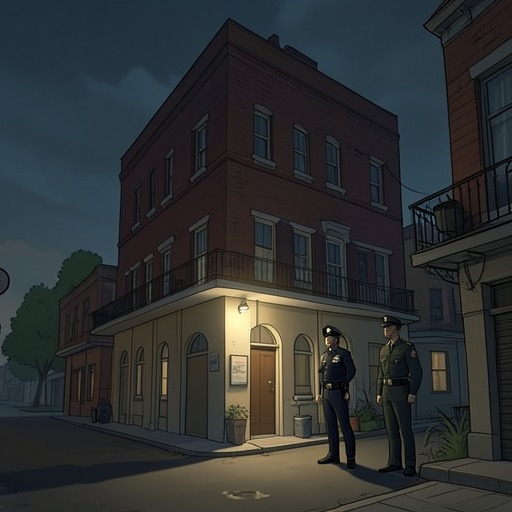
Setting and Discovery
The search began in a building whose ground and first floors seemed unremarkable: worn furniture, balding carpets and sullen wallpaper. A well-stocked modern kitchen and an unusually well-fitted bathroom sat alongside a ground-floor office. In one corner of the office, a wooden telephone booth had glass panels and a small device that could lock the telephone dial and prevent the phone from being used. New filing cases held a couple of hundred blank cards; only a few books remained on the shelves.
The route to the upper level made the house’s ordinary appearance increasingly difficult to trust. The staircase between the first and second floors had been removed, leaving a cheap wooden ladder leading through a hatch. Upstairs, small wooden rooms had rough, damaged walls and dim light from bare bulbs. Some windows looked down into the central courtyard of the hollow-square building; those facing outward had been bricked up. In one cell-like room stood a coke-burning stove and old army cooking pans, while its floorboards had been scrubbed white.
The Tank and Its Contents
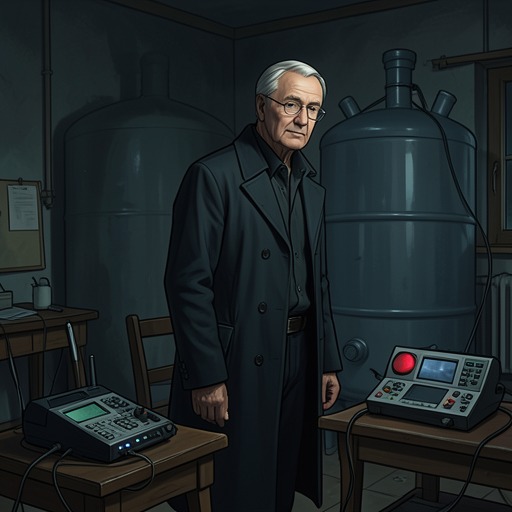
Beyond a corridor and a heavy wooden door, the narrator entered one of the largest rooms, measuring about twenty feet by twenty-five. A heavy metal tank, eight feet square and five feet high, stood at its centre, holding four feet of water. Waterproof cloth had been roughly tacked across the floor around it. The room’s scale and the tank’s position made the installation impossible to mistake for ordinary domestic plumbing, though the search did not establish its function.
Chico probed the water with a stick from the garden and called out that there was something inside. Police spent nearly an hour retrieving pieces of a tape recorder and a harness from the tank. The finds turned an obscure, water-filled structure into evidence of concealed equipment, but the account does not identify what had been recorded, who had worn the harness, or whether the objects had been placed there for concealment or some other purpose.
The House as Concealed Infrastructure
The tank mattered within a larger pattern of spaces and devices that made the house difficult to read from its ordinary rooms. A locked telephone, blank filing cards, an improvised ladder, bricked-up exterior windows, small upper rooms and the tank formed a collection of details whose significance emerged only through close inspection. The narrator’s search therefore moved from a familiar-looking home into an interior organized around restricted access and hidden contents.
The tank also belongs beside the novel’s wider attention to surveillance technology, though the evidence does not connect it directly to other systems. Films of Jay and Housemartin had been made by a concealed camera in a moving van; on Tokwe, cars carried compulsory radio monitors that reported conversation and vehicle direction; and infrared cameras watched roads and a shipping channel. Those devices show different ways of making movement or activity legible. At 42 Acacia Drive, by contrast, the recovered recorder parts and harness remain physical clues whose precise role is unresolved.
Significance and Limits
The apparatus’s narrative force lies partly in this gap between material certainty and operational uncertainty. The tank’s dimensions, its water level and the objects recovered from it are described precisely, while their purpose is withheld. The discovery confirms that the building contained more than its domestic façade suggested, yet it does not by itself disclose who used the equipment or what it had done. The tank thus anchors the search in concrete evidence while preserving the larger mystery that brought the investigators into the house.